 Sam Sand Dunes, Jaisalmer
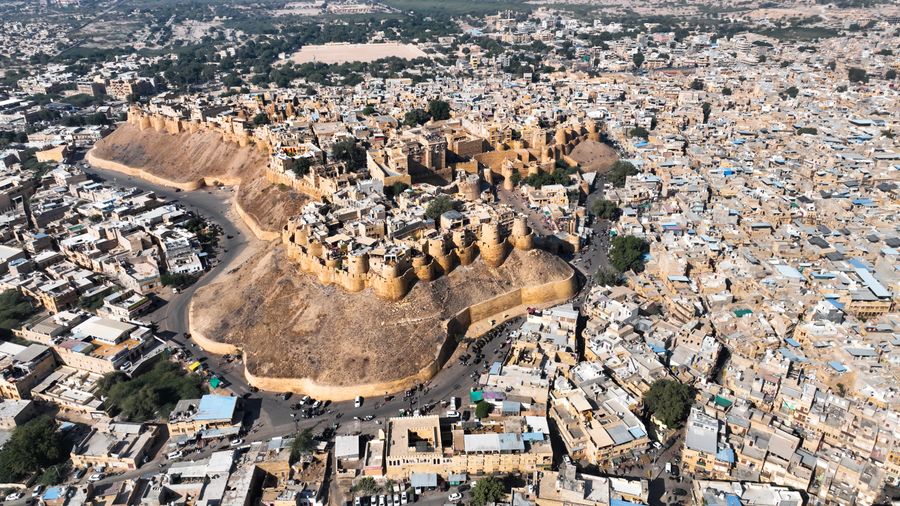
Jaisalmer Fort
One of very few forts anywhere that people still live inside. Narrow lanes, Jain temples, the Raj Mahal palace museum and a walk round the ramparts with the whole town below. Go early, before the heat and the tour groups.

The golden city · Rajasthan
Twelve places worth your time, how long each takes, how far it is from the city, and the order to do them in so you are still on the dunes for sunset.
Planning the day
Everything in the old city sits within a couple of kilometres, so you are not fighting distance here. What costs people the best of Jaisalmer is doing things at the wrong hour: the fort at noon when it is hot and the light is flat, Bada Bagh in the middle of the afternoon, and then a five o'clock departure for Sam that turns the sunset into something you watch through a car window.
Do it the other way round. Lake or fort early, havelis before lunch, the outlying sites in the last two hours of daylight, and leave for the dunes by three. That single change is the difference between a good day and a rushed one.
A car and driver for the day costs less than most visitors expect and saves an hour of standing around negotiating autos in the heat. We run our own cars, so the driver who takes you round the city is the one who drives you out to the camp afterwards.

Places to visit
✦
Distances are from the city centre by road. Durations are how long people actually spend, not the minimum you could get away with.
One of very few forts anywhere that people still live inside. Narrow lanes, Jain temples, the Raj Mahal palace museum and a walk round the ramparts with the whole town below. Go early, before the heat and the tour groups.

Five havelis built by one merchant family in the 19th century, and the finest stone jali work in the city. One section is a proper museum you can walk through; the rest is best seen from the lane below.

Known for the arched upper storey shaped like a peacock, built by a prime minister of the state whose reputation was as dramatic as his house. Quick stop, and it sits on the same loop as Nathmal.

Carved by two brothers who worked one side each, which is why the two halves do not quite match. Worth the stop even if you only look up from the street.

A rainwater reservoir dug in the 14th century, ringed with ghats, chhatris and small temples. Boats in the evening, catfish that will eat anything, and a lot of migratory birds through winter. Best at sunrise or sunset.

Royal cenotaphs on a hillside just outside town, with wind turbines turning behind them. The light here in the last hour of the day is the best in Jaisalmer, and it is the photograph most people leave with.

A village abandoned in the 19th century and left standing, with a story about a minister, a headman's daughter and a curse that every guide tells differently. It sits on the road out to Sam, so it costs no extra driving.
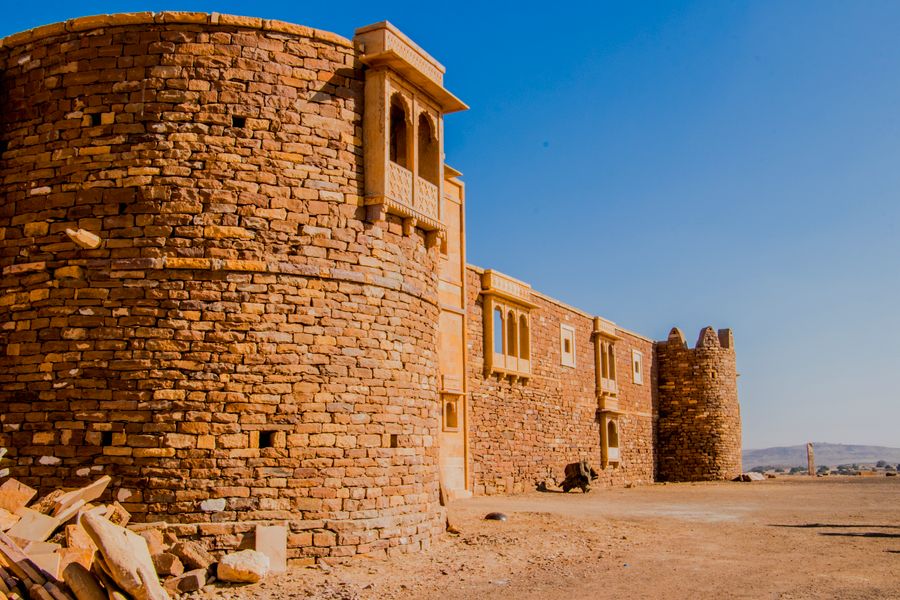
A ruined fort above another abandoned village of the same Paliwal group as Kuldhara, with a small museum and peacocks on the walls. Quieter than Kuldhara and usually skipped, which is exactly why it is worth adding.

Sandstone cenotaphs on the ridge below the fort, and the closest sunset point to the city. Ten minutes from the fort gate, so it works on an evening when you are not driving out to the dunes.

A restored lake palace and Jain temple complex at Amar Sagar, and the older Jain temples at Lodurva a little further on, where the carved torana arch is the thing to see. Half a morning, and almost nobody else there.

The dune belt west of the city and the reason most people come to Jaisalmer at all. Camel and jeep safari, sunset, folk music, dinner and a night in a tent at our camp.

The 1971 battlefield at Longewala with its tank display and museum, and the Tanot Mata temple further on, kept by the BSF. A long drive through empty desert, and a memorable one if you have a spare day.
Monument entry tickets are paid at each site and change from time to time, so we do not quote them here. Ask at the ticket window, and carry cash — not every counter takes cards.
A one-day plan
This is the route we drive most often, and it works because it follows the light rather than the map. If you only have one day before heading to the desert, do it in this order.
Want the city and the dunes across two days instead? That is the 2 nights / 3 days package, and it is the trip we would recommend to most first-time visitors.
Cool, quiet and full of birds in winter. Half an hour is plenty.
Lanes, Jain temples, the palace museum and the ramparts before the crowds and the heat.
Patwon Ki Haveli first, then Salim Singh and Nathmal on the same short loop.
In the market below the fort, or on a rooftop looking back at it.
Amar Sagar and Lodurva if you are staying in town, Kuldhara if you are heading west to Sam.
The cenotaphs in the last hour of light, which is when they are worth it.
Vyas Chhatri if you are sleeping in the city, Sam Sand Dunes if you are coming to the camp.
Beyond the city
Each of these is a half or full day with a car. Worth it if you have three days in Jaisalmer rather than two.
Practical notes
Sightseeing FAQ
Two days and two nights is comfortable: one day for the city and the havelis, one afternoon and night at the dunes. One night works if you arrive on the morning train and leave the next evening. Three days lets you add Longewala and Tanot.
Yes, if you start early. Gadisar Lake at 7:30, the fort at 9, the havelis before lunch, Kuldhara or Bada Bagh in the afternoon, and you are at Sam Sand Dunes for sunset.
Jaisalmer Fort, Patwon Ki Haveli, Salim Singh Ki Haveli, Nathmal Ki Haveli, Gadisar Lake, Bada Bagh, Kuldhara and Sam Sand Dunes. Add Khaba Fort, Vyas Chhatri, Amar Sagar and Lodurva if you have longer.
The car and driver we can quote exactly — ask us for your date. Monument tickets are paid at each site, vary between Indian and foreign visitors, and change from time to time, so we do not publish those figures.
A guide helps inside the fort and at Patwon Ki Haveli, where the history and the family stories are the point of the visit. Everywhere else you can walk round on your own. We can arrange a licensed guide if you ask in advance.
Yes. Several thousand people live inside the walls, with houses, shops, temples and guesthouses in the lanes. It is one of the few living forts left, which is also why water and drainage inside it are a genuine conservation concern.
Early morning for the fort and Gadisar Lake, and the last hour before sunset for Bada Bagh, Vyas Chhatri and the dunes. The sandstone goes properly gold at both ends of the day and looks flat in the middle.
About 18 km, roughly half an hour, and it sits on the road out to Sam Sand Dunes. That makes it an easy stop on the way to the desert camp rather than a separate trip.
Sam has the bigger dune belt, more camps and the full evening programme, and it is where our camp is. Khuri is smaller and quieter. If it is your first desert night, Sam gives you the whole experience.
October to March, with warm days and cool nights. February brings the Desert Festival. April to June crosses 40°C by afternoon, and the monsoon months are quiet, humid and cheap.
Yes, and it is the usual way guests do it. City in the morning, drive out with a stop at Kuldhara, safari and sunset at Sam, then the night in a tent. See the tour packages.
Autos work for short hops in the old city. For a full day covering Bada Bagh, Amar Sagar and Kuldhara a car with a driver is easier and cheaper than a string of separate rides. We run our own cars for this.
Tell us your date and how many of you there are, and we will put a car and a driver with you and time it around your desert night.